
 Cricket
 Tennis
 Football
 Table Tennis
 Casino
 Volleyball
 Baseball
 Basketball
 Horse Racing
 Politics
 Greyhound Racing
 Binary
 Int Casino
 Sports Book
 Ice Hockey
 Darts
Darts Futsal
 Rugby
Rugby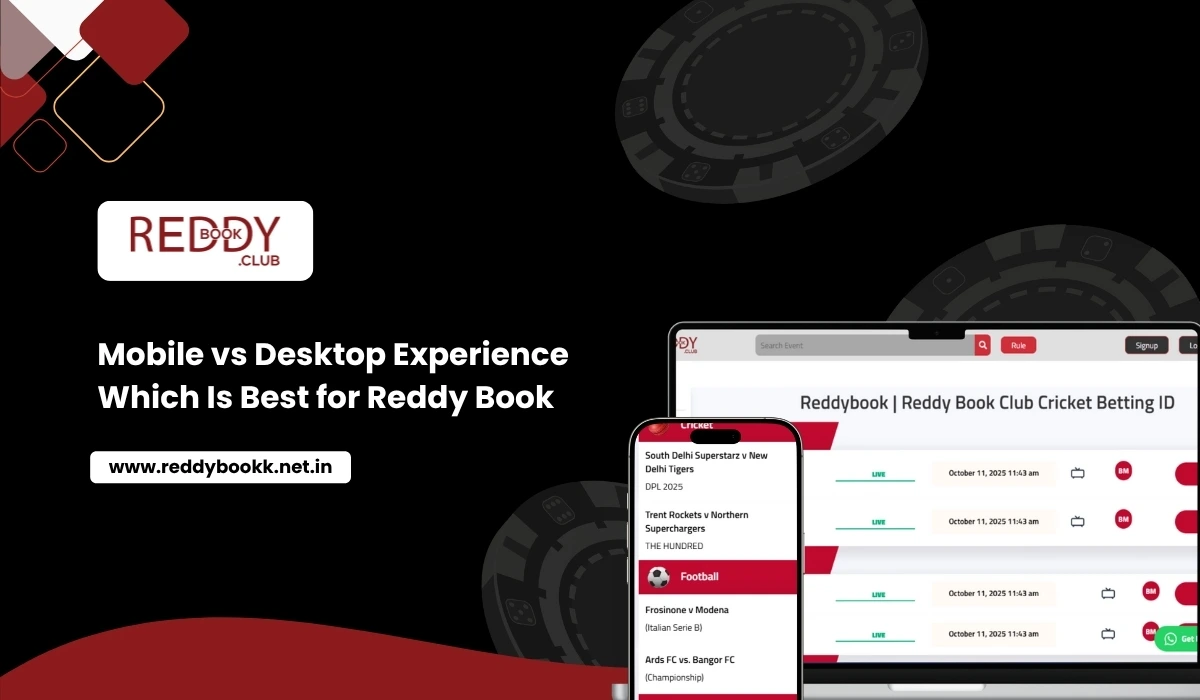
User experience matters more than ever today. Whether someone prefers browsing on a smartphone or working on a full desktop setup, each platform shapes how they interact with tools, websites, and apps. This comparison becomes even more important for platforms that focus on speed, accessibility, and convenience. That is why many users often wonder which device gives the most seamless experience when accessing Reddy Book and its features.
Both mobile and desktop environments come with their own strengths. Some people want speed on the go, while others want more control with a larger screen. Choosing the right device can enhance workflow, simplify navigation, and make every task smoother.
This guide breaks down the mobile vs desktop experience in detail to help you decide which device is best for your needs. You will learn how each platform performs, what advantages they offer, and which one is ideal for different types of users.
Understanding the Rise of Mobile and Desktop Usage
Digital behavior has changed dramatically in the past decade. Mobile devices have become essential parts of everyday life. People rely on smartphones for browsing, payments, communication, work, and entertainment. At the same time, desktops remain powerful tools, especially for users who want stability, accuracy, and multi-tasking power.
When accessing platforms like ReddyBook, the choice between mobile and desktop can impact speed, performance, and ease of use. Each device type offers a different level of flexibility. Some users prefer the comfort of a keyboard, while others love the simplicity of tapping and swiping.
Before diving into the detailed comparison, it’s important to understand what each experience offers.
Mobile Experience: Designed for Convenience and Flexibility
The mobile environment is built around speed and portability. It is ideal for users who want instant access from any place. Today, nearly every task can be performed from a smartphone, which makes it the go-to device for millions of users.
1. Accessibility Anytime, Anywhere
Mobile devices make it easy to check updates, browse pages, and manage tasks with simple touch gestures. You don’t need to sit in front of a system. Just unlock your phone and continue where you left off.
This level of convenience is one of the biggest reasons why mobile access is growing. You can instantly navigate the ReddyBook App without depending on additional hardware.
2. User-Friendly Interface
Most modern platforms and apps are optimized for mobile use. They offer layouts that adjust automatically to smaller screens. Buttons are larger. Navigation is smoother. The overall experience focuses on simplicity.
This makes mobile devices perfect for quick actions, browsing, or checking important information on the move.
3. Faster Login and Quick Navigation
Smartphones store data securely and allow quick access using biometrics like fingerprints or face unlock. This helps users access features faster, especially when they want to perform a quick task.
Mobile devices also reduce loading time because apps are designed to run smoothly even with limited resources.
4. Instant Notifications and Alerts
Push notifications are a major advantage of using mobile. You can stay updated in real time without checking manually.
Mobile notifications allow you to take immediate action, making the experience more dynamic.
5. Perfect for Light to Medium Usage
If your usage includes checking updates, reviewing information, or completing simple tasks, a mobile device is more than enough. It saves time, gives flexibility, and ensures you stay connected always.
Read Also: How to Access ReddyBook Easily on Your Mobile Device
Desktop Experience: Ideal for Productivity and Precision
Desktop devices have been the backbone of digital work for years. They offer unmatched stability, precision, and a much larger visual workspace.
This makes desktops the preferred choice for users who want complete control and a distraction-free environment while accessing platforms like Reddy Book login.
1. Enhanced Screen Size for Better Visibility
A larger screen changes everything. It allows users to read text easily, view more data at once, and navigate across multiple tabs without feeling cramped.
Tasks that require detailed attention become easier with a desktop monitor.
2. Multitasking Power
If your workflow involves opening multiple tabs, switching between tools, or analyzing large amounts of information, a desktop setup performs far better.
You can:
- Run several windows at once
- Switch quickly
- Compare information side-by-side
This level of multitasking is difficult to achieve on a small mobile screen.
3. Stable and Consistent Performance
Desktops are built for heavy usage. They operate continuously without performance drops and support long work sessions smoothly.
Users who prefer stability and long-term performance often choose desktops.
4. Better Keyboard and Mouse Control
Typing, selecting, scrolling, and navigating become faster with a keyboard and mouse. This improves accuracy and reduces mistakes.
Desktop devices are especially helpful if you handle detailed tasks or spend long hours working.
5. Best for Intensive or Long Sessions
If your work requires focus and precision, a desktop is the better option. You can stay productive without distractions.
Mobile vs Desktop: Feature-by-Feature Comparison
To understand the differences better, here is a detailed comparison of key performance areas.
1. Speed and Performance
- Mobile: Fast for quick tasks, optimized for smooth navigation.
- Desktop: Faster processing power for extended or heavy usage.
2. Screen and Viewing Experience
- Mobile: Compact, great for on-the-go access.
- Desktop: Large and clear view, ideal for detailed tasks.
3. Ease of Use
- Mobile: Simple, touch-based navigation.
- Desktop: More control with keyboard shortcuts and mouse.
4. Flexibility
- Mobile: Highly portable. Use anytime, anywhere.
- Desktop: Limited to one location but offers a stable workspace.
5. Multitasking Ability
- Mobile: Limited due to small screen.
- Desktop: Excellent multitasking features.
6. Battery and Power
- Mobile: Depends on battery life.
- Desktop: Continuous usage without battery issues.
7. Notifications
- Mobile: Real-time alerts through push notifications.
- Desktop: Fewer live alerts unless browser notifications are enabled.
Which Device Is Best for You?
Choosing between mobile and desktop depends on the type of user you are. Both platforms offer valuable benefits.
Choose Mobile If:
- You want quick access.
- You prefer portability.
- You need frequent notifications.
- You use the platform for short sessions.
- You value convenience over detailed control.
Choose Desktop If:
- You work for long hours.
- You need precision and accuracy.
- You multitask extensively.
- You prefer a larger screen.
- You want stable and consistent performance.
Both device types offer excellent experiences. However, the best choice depends on your personal workflow and usage style.
Why a Hybrid Approach Works Best
Today, many users combine both mobile and desktop experiences. They use mobile for quick actions and desktop for long sessions.
This hybrid approach brings the best of both worlds.
1. Mobile for Speed
Great for simple tasks, quick browsing, and notifications.
2. Desktop for Productivity
Perfect for handling bigger tasks without interruptions.
3. Seamless Switching
Modern platforms allow users to switch between devices without losing progress.
This flexibility makes the experience smoother and more efficient.
Final Thoughts
Both mobile and desktop platforms offer excellent user experiences for digital tasks. If convenience and mobility are your priorities, smartphones are your best option. If stability, accuracy, and productivity matter more, desktops offer a richer experience.
Many users today prefer using Reddy Book on both devices depending on their needs. Combining both environments gives you the maximum advantage. You can act fast on mobile and work efficiently on desktop.
No matter which device you choose, the key is to pick a setup that suits your routine, usage pattern, and comfort level.